

By Lorna Garey
The Malden City Council began its Tuesday meeting with a moment of silence in honor of veterans and active service members, as well as a special recognition honoring the memory of Dr. John Tramondozzi, a lifelong Edgeworth resident, 1960 Malden Catholic graduate and 44-year chemistry professor at Curry College who served as president of the Malden Public Library Board of Trustees.
“His commitment to preserving and celebrating Malden’s heritage has left a lasting impact on our community,” said Councilor Paul Condon. “He played a vital role in curating and expanding the library’s art collection. He also held leadership positions with both the Malden Historical Commission and the Malden Historical Society, generously giving time, expertise and passion for many years.”
The Malden Public Library’s art collection contains some unexpected pieces that reflect Tramondozzi’s discerning eye; if you have not yet visited, the gallery is open Wednesdays 2 to 4 p.m. and Saturday 2 to 3 p.m.
Next, students from Malden Catholic High School, Malden High School and Northeast Regional took to the podium to read a proclamation making Hispanic Heritage Month official for Sept. 15 through Oct. 15 in Malden. Councilor Karen Colón Hayes, who organized the youth involvement, praised the students for helping bring light to the city’s diverse cultures, while Councilor Chris Simonelli called out another community volunteer.
“I want to thank Gladys Rogers, who’s out there today, because I know she’s been a big proponent for years now on the Spanish Heritage Month, and I want to thank Councilor Hayes too for bringing you guys up here tonight,” said Simonelli.
Enterprise and stabilization funds
The council tackled several orders designed to improve the city’s long-term financial stability and transparency.
In Massachusetts, stabilization funds operate as reserve accounts that allow municipalities to save money over multiple fiscal years. General-purpose stabilization funds act as emergency reserves to protect against revenue shortfalls; adding money to a general fund requires a majority vote from the city council, while spending that money requires a two-thirds supermajority. Special-purpose stabilization funds are earmarked for specific uses, such as funding sidewalks. Creating these funds requires a two-thirds vote, but once established, spending money for its intended purpose requires only a majority.
Council President Amanda Linehan clarified that the idea is to establish both a general-purpose stabilization fund and a short-term capital needs special-purpose stabilization fund.
“This is about creating more transparency in how our funds are used,” said Councilor Carey MacDonald. “One of the things that we heard consistently when we were talking with the public about the budget needs of the city, in many of the forums about the tax override, was ‘What is the use of all of these quote cash reserves that are labeled as free cash?’”
With the city’s operating cash and rainy day reserves and the money intended to fund capital projects in the same account, it’s difficult to give residents a clear view of operating versus emergency funds.
“I think it helps provide that stability, so that one council or one administration can’t spend all the money and leave the city in a financial mess for the next council,” said Councilor Ryan O’Malley, who supported the papers.
In contrast, solid waste and water and sewer budgets are often managed as enterprise funds, which allow cities to operate specific public services, such as trash and recycling, like a standalone business. By using this structure, the city can track the full cost of providing services, allocate expenditures accurately and show that fees are reinvested rather than being absorbed into the general operating budget.
The council voted to establish a Solid Waste Enterprise Fund beginning in FY2028. Councilor Stephen Winslow explained that creating a dedicated fund clarifies the city’s solid waste costs and revenues, while MacDonald pointed to the current gap between revenue and disposal expenses:
“Right now we’re projecting about $1.2 million in revenue for trash pickup this year, and we’re projected to spend $3.9 million,” said MacDonald. “That’s a big gap.”
The $2.7 million shortfall is currently covered by the general budget.
The ordinances were referred to a joint meeting of the Finance and Rules & Ordinance Committees.
School shortfall, Malden River Works transfers
Mayor Gary Christenson submitted a memorandum regarding three financial papers.
Paper 392-26 transfers $400,000 from health insurance savings to the Malden Public Schools to cover a FY2026 Net School Spending calculation shortfall.
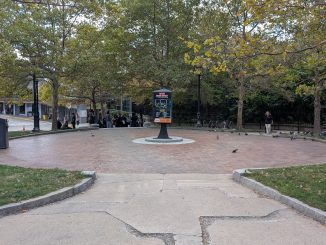
Papers 393-26 and 394-26 reappropriate approximately $1.29 million in cash and $938,000 in unused bonded funds from the Roosevelt Park revitalization project that was canceled in 2024 due to high costs to help complete a boathouse and salt shed for the Malden River Works Project.
Christenson noted that while Malden River Works projects have thus far been built entirely using grants and outside funding, with substantial benefits to the city and DPW, additional revenue is required.
“To be clear, these funds are not part of the funding for the currently planned work at Roosevelt Park,” said Christenson.
Rather than taking on new borrowing or drawing from city reserves, he recommended reappropriating remaining bonded funds from the canceled Roosevelt Park project as the most prudent option.
MacDonald explained that once municipal funds are bonded, the city is required to spend them on an eligible project; leaving bonded funds unspent can negatively impact the city’s future borrowing ability
All three papers were referred to the Finance Committee.

Pushback on Mass Save cuts
The council unanimously passed a resolution urging the Massachusetts State Legislature to reject a proposed $1 billion cut to Mass Save funding. The Mass Save program provides financial incentives to help homes and businesses become more energy efficient and shift to clean energy. The resolution called on legislators to protect and strengthen the Mass Save program and Green Communities grants.
MacDonald noted that Malden residents received $5.7 million in Mass Save incentives in 2024 alone, along with other benefits.
“Malden also uses funding from Mass Save to support one of our housing outreach specialists,” they said. “Another example of us using grant funding to do the work that needs to get done without burdening our taxpayers in Malden.”
There’s also real concern over the ability of some residents to afford heating this season.
“The price of heating oil has gone up 75% over the last couple years versus 11% for electricity and 6% for gas,” said Winslow. “People who have heating oil are getting tremendous bills and under great strain, and we need resources to be able to help our residents.”
Micromobility and e-bike safety working group
In response to rising concerns regarding speeding and reckless operation of e-bikes and motorized scooters, the council voted to collaborate with the Transportation Commission, School Committee, police, fire and community groups to draft local policies and launch an educational outreach effort.
“Councilor [Ari] Taylor and I met on this a year ago, and we really couldn’t do much with it because of the way our current state law is written,” said Councilor Michelle Luong.
That’s poised to change thanks to pending legislation filed in May by Governor Maura Healey, called An Act to Enhance the Safe Use of Micromobility Devices (S. 3077), that sets a new regulatory framework for e-bikes and makes helmets mandatory for riders 16 and under.

use the three-class system. Data: Massachusetts 2026 Special Commission on Micromobility Report.
“We can have a meaningful conversation and a working group that is going to be able to address these issues, because eventually somebody’s going to get hurt and someone’s going to get killed,” said Luong.
Winslow added that ER doctors from Children’s Hospital and Mass General testified that in the past few years, injuries have tripled because of these devices.
“And the worst thing, because of their speed, is that they’re seeing young kids getting injuries you might see a motorcyclist get,” he said. “We just know viscerally and from our constituents we need to get out ahead of this.”
MacDonald encouraged balancing safety with respect for mobility choice.
“This is actually a problem we want to have, which is people are making transportation choices that align with their budgets,” they said. “They’re trying to do things that don’t just contribute to more traffic on the roads.”
Councilor Peg Crowe asked about the mechanics of assembling a working group. Linehan expressed flexibility and that the effort would be shaped by state law but said there is a sense of urgency.
“If the resolve is the sense of the council that this is becoming an issue so critical that we can’t ignore it any longer, that is what’s before us,” said Linehan. “We could pass it as it’s written and then continue to talk about how we gather that community input, or if it’s our desire to create a committee, we could do it ourselves, or we could work with the mayor’s office. That’s sometimes a faster path.”
The resolve passed unanimously.
Residential kitchens cross another hurdle
Following debate regarding Board of Health regulations and health inspection capacity, the Council voted 8-0 to ordain zoning amendments permitting residential cottage food kitchens, set to take effect Jan. 1, 2027.
“If we ordain this tonight and send it, it sends a bigger message to the Board of Health that we are all in support of this, and like Councilor Luong said, the bare minimum is that they adopt the state guidelines,” said Councilor Ari Taylor, who partnered with Luong on the new ordinance. “I would hope that we can get this on the Board of Health’s agenda as soon as possible and move this forward as soon as we can.”
Winslow abstained pending the Board of Health action.
Other business and personal privilege
Cannabis license transfers: The Council ordained an amendment allowing marijuana establishments to transfer special permits to new operators with approval from the city’s Cannabis Licensing and Enforcement Commission.
Transportation Commission designee: An ordinance update was ordained allowing the Chief of Police to designate a traffic division officer to serve on the Transportation Commission.
Water billing administrative housekeeping: The Council adopted an order ratifying the recording of 2008 water/sewer lien collection statutes at the Registry of Deeds and enrolled code edits formally reflecting monthly billing.
Appointments and confirmations: Lisa Picardi was reappointed to the Disability Commission, Julianne King was confirmed as a member of the Council on Aging and Arbin Timilsina was confirmed as a member of the Commission on Climate Action and Sustainability.
Appointment of Michele Ferguson as a full member of the Planning Board, as submitted by Christenson, was sent to the Personnel and Appointments Committee for review.
To close the meeting, councilors shared a round of upcoming community events. Learn more about Halloween in Malden.
- Zonta Club Fundraisers & Movie Night: Luong and Taylor announced a Zonta Club Scavenger Hunt on Oct. 17. Volunteers and teams are welcome.
- Free scares: The annual Haunted Woods event returns to Pine Banks on Oct. 24.
- Salemwood School PTO Bingo: Winslow highlighted a K-4 Bingo night at the Salemwood School cafeteria on Friday.
- Malden Safe Streets E-Bike Forum: Winslow also invited residents to a discussion with State Mobility Commission head Chris Carter on Monday, Sept. 28, at the Bay State Common cohousing community.
- Malden Public Safety Day: McDonald reminded the public of Public Safety Day on Sunday, Oct. 4, from 11 a.m. to 1 p.m. at Linden Park.
- Malden River Works Grand Opening: Councilors Winslow, Crowe, McDonald, and Colón Hayes celebrated the upcoming grand opening of the Malden River Works Park on Sunday, Oct. 4, from 1 p.m. to 4 p.m.
- YWCA Bowling & Trunk-or-Treat: Crowe announced the YWCA Annual Bowling fundraiser on Friday, Oct. 16, and the annual Trunk-or-Treat on Canal Street scheduled for Oct. 25.
- Malden Cosplay Celebration & Public Art Tours: Linehan reminded the community that the Malden Cosplay Celebration takes place Oct. 3 from 10 a.m. to 5 p.m. on City Hall Plaza, accompanied by walking tours of new downtown public art murals at 4:30 PM.
Finally, during personal privilege, Colón Hayes recognized members of the Malden River Works team present in the audience.
“I can’t believe that it’s finally going to be open — it’s going to be tremendous,” she said, noting that advocates for city parks are “all in support of each other here.”
There will be a Joint Finance Rules and Ordinance Meeting on Sept. 29.
This is a recap of the Sept. 22, 2026 City Council meeting. The full meeting is on YouTube.
The City Council agenda has links to papers and supporting documents.



Thanks for the reporting.